
I want to be honest about something.
When I first moved in with John and saw how he approached food I thought he was insane.
Not in a concerning way. Just in a — why is there an enormous pot of rice on the stove and approximately four pounds of ground beef in the fridge at all times — kind of way.
He tried to explain it. I nodded politely and continued making individual meals every day like a normal person.
Then I had a week from hell. Nonstop fires to put out at work, deadlines, errands, life admin, the whole thing. By Thursday I had no mental energy left and absolutely no desire to cook. I opened the fridge and found — you guessed it — John’s rice and meat.
I made a bowl in four minutes. Added some avocado and salsa. It was genuinely good. I felt great afterward.
I have been doing it his way ever since.
He was right. He is insufferably calm about being right.
What Batch Cooking Actually Looks Like For Us
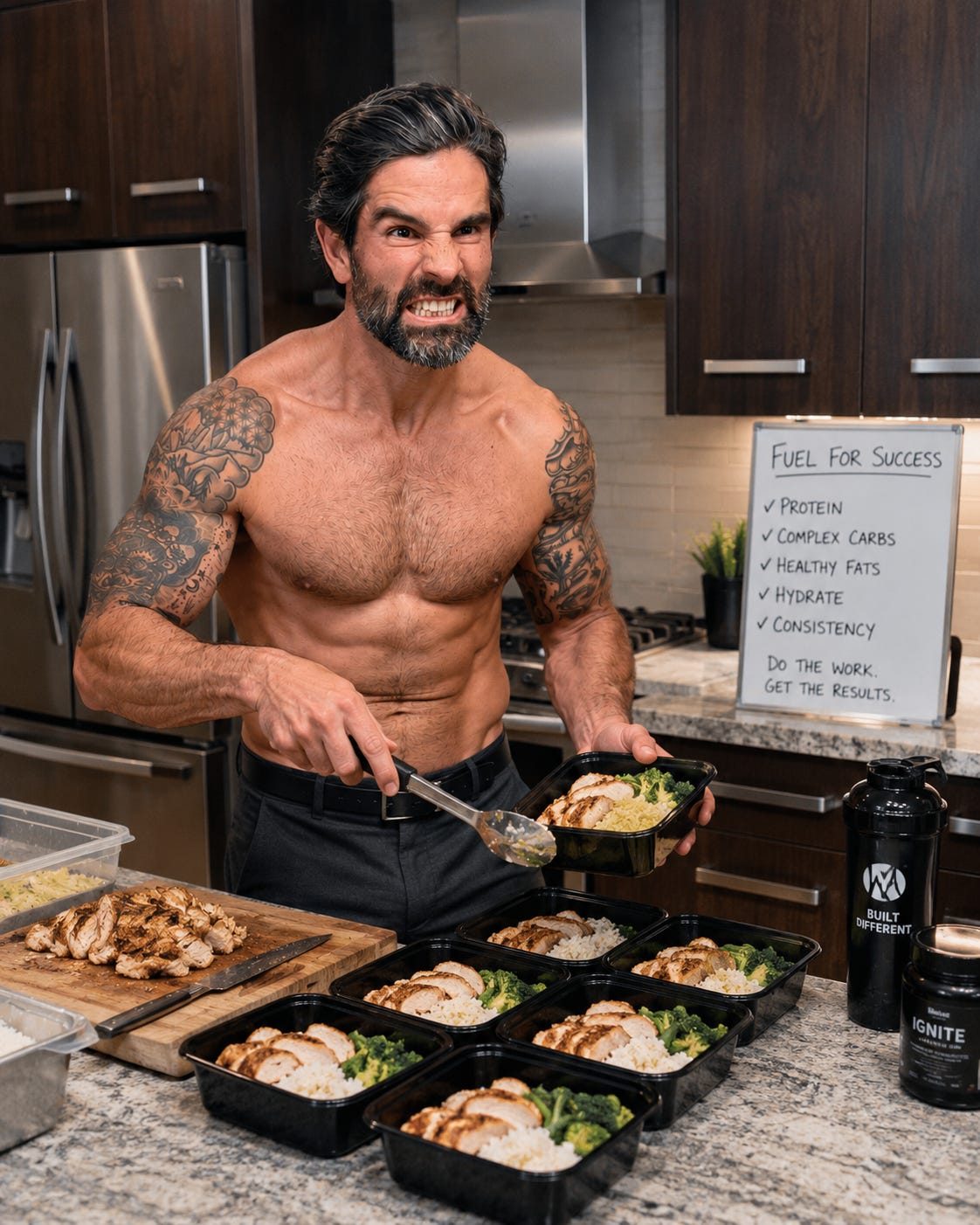
The batch cooking system works whether or not you cook with your shirt off. John trains shirtless because as Paul Chek once said — “if your doctor doesn't look like me, don't listen to your doctor.” John applies this logic everywhere. Including apparently the kitchen.
If you missed the story behind this — Episode 9 of The Axis Method is worth your time.
That is not what we do.
Here is what we actually do:
Whenever we have time — not on a schedule, not always on a Sunday, sometimes a Tuesday night, sometimes a random Thursday afternoon — we make two things in large quantities:
A big batch of organic short grain brown rice
A large amount of protein — usually ground beef, ground turkey, or chicken
That’s the whole system.
A rice cooker handles the rice with zero effort. The protein gets cooked in a large pan or Dutch oven, seasoned simply, and stored in the fridge. The whole process takes maybe 30 to 40 minutes of actual active cooking time.
Then we pull from it all week.
Breakfast bowl. Lunch bowl. Dinner bowl. Add whatever vegetables, sauces, and add-ins we have and suddenly a complete meal appears in under five minutes without a single decision required beyond “what sauce am I in the mood for today.”
It sounds almost too simple. That is exactly why it works.
Why Your Brain Hates Cooking on Hard Days
Here is something nobody talks about enough in fitness content:
Decision fatigue is quietly destroying your nutrition.
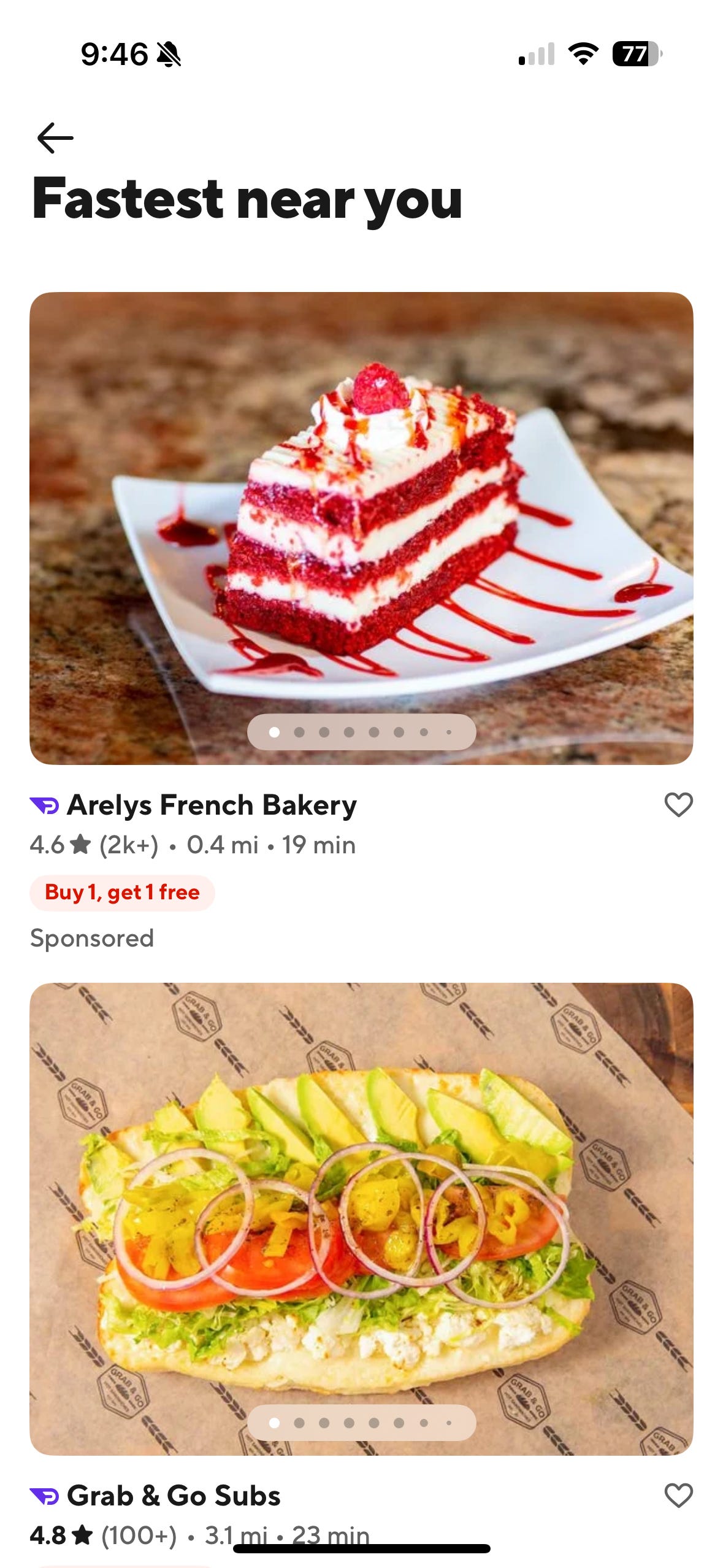
At some point your brain stops asking “What would support my goals?” and starts asking “What can arrive at my house in under 20 minutes?” It’s not a mistake that DoorDash has a whole section called, “Fastest near you”.
Every meal you have to think about from scratch costs you mental energy. And by the time you have spent a full day working, coaching, managing responsibilities, answering messages, and trying to be a functional adult — the last thing your brain wants to do is figure out a nutritionally optimal dinner.
So it doesn’t.
It takes the path of least resistance. Whatever is fastest, closest, and most comforting. Which is usually not the thing that supports your training.
This is not a character flaw. Research on decision fatigue and eating behavior consistently shows people make less intentional food choices as cognitive load and stress increase throughout the day.
In other words: the more exhausted your brain becomes, the more likely you are to default toward convenience and hyper-palatable foods.
That’s why systems matter more than motivation. This is just how human brains work under cognitive load.
The fix is not more motivation or more willpower. Those are horrible long term strategies. They show up when life is easy and disappear the moment things get genuinely hard — which is exactly when you need them most.
The fix is removing the decision entirely.
When the rice and protein are already in the fridge the decision has already been made. Your tired Thursday brain doesn’t have to do anything except open the container. Because by Thursday evening most people are approximately three minor inconveniences away from ordering $87 worth of takeout and emotionally support dessert.
How Much to Make and How Long It Lasts
This is the practical part people always ask about:
Rice: We typically cook four to six cups of dry rice at a time. That produces a significant amount of cooked rice that holds well in the fridge for four to five days and reheats perfectly. A rice cooker is genuinely one of the most useful tools in our kitchen — set it and forget it.
Protein: We usually cook two pounds of ground beef at a time. That's our baseline batch. Then throughout the week we'll cook fresh chicken or turkey as we go — grilled, baked, whatever is quick — or grab a rotisserie chicken from Costco when we need something fast. It's one of the easiest high protein shortcuts out there and it shreds perfectly over rice. Cooked meat keeps well in the fridge for three to four days. If we know it’s going to be a really heavy week we’ll make more.
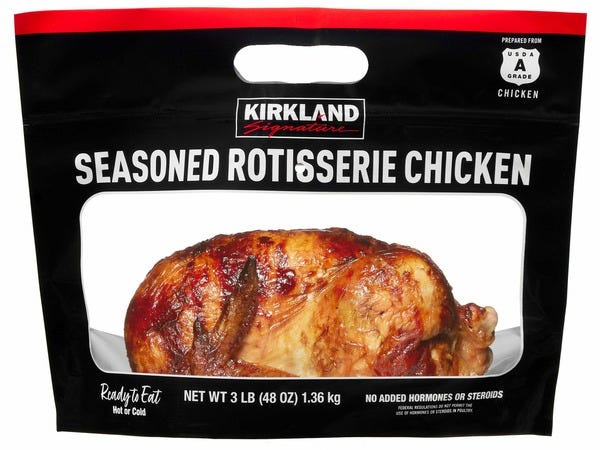
The rotation: We don’t always make the same protein twice in a row. One batch might be ground beef. The next might be ground turkey or shredded chicken. The base system stays the same — the protein rotates to keep things from getting stale.
Keeping It From Getting Boring
The rice and protein are the canvas. Everything else is the paint.
Which honestly sounds much more sophisticated than “adult Lunchables,” but spiritually it’s the same concept.
The same base meal tastes completely different depending on what you add. This is how you eat the same fundamental thing every day without feeling like you’re eating the same fundamental thing every day.
A few of our current flavor rotations on top of the base:
Taco bowl — salsa, avocado, Siete charro beans, lime, hot sauce
Mediterranean — olive oil, lemon, garlic, cucumber, a little feta if you tolerate dairy
Simple and clean — just salt, olive oil, and whatever vegetables we air fried from the Costco freezer section
Burger bowl — ketchup, mustard, pickles, avocado. John discovered this and it is better than it sounds.
The protein and carb stay consistent. The flavor profile changes. That combination of structural consistency and flavor variety is the sweet spot that makes a system actually sustainable long term.
The Real Reason This Works
We talk a lot about Minimum Effective Dose in training — doing the least amount of work necessary to produce the desired result, then recovering and repeating.
The batch cooking system is MED applied to nutrition.
Minimal effort. Maximum “wow, we actually have food in the house.”
You make one decision — when to cook and what protein to use — and that single decision powers five days of effortless meals. The return on investment is enormous compared to making individual decisions three times a day every day of the week.
And here is the part that surprises people most:
Simplicity and enjoyment are not opposites. Because when you are not stressed about cooking and not scrambling to figure out what to eat, you enjoy the food more. The psychological relief of having it handled makes everything taste better.
We are not exaggerating when we say this system has made our nutrition more consistent than any specific diet, meal plan, or nutrition program either of us has ever followed.
Because it removes friction instead of adding more of it.
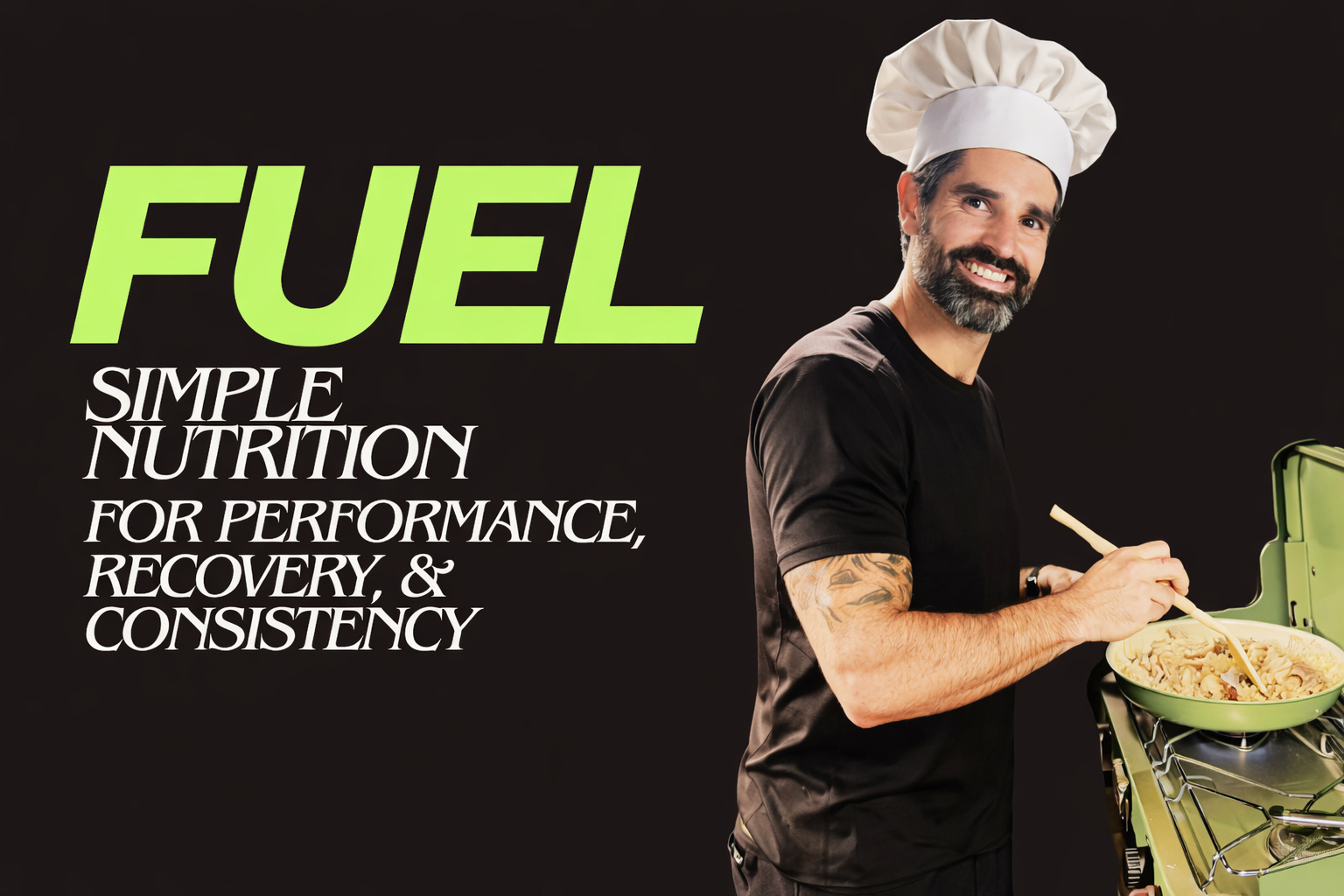
BEHIND THE SCENES MONENT — One of the Fuel images that didn’t make the cut. AI added that chef’s hat. LOL didn’t think it looked quite right on the camping stove.
One thing we also believe strongly is that nutrition should still feel enjoyable and sustainable.
We’re not trying to create a lifestyle where every meal feels rigid or overly optimized.
Most weeks, we intentionally plan at least one meal that feels more relaxed and fun:
homemade chili
spaghetti and meatballs
burgers on the grill
tacos
barbecue with friends or family
Ironically, having those meals planned in actually makes consistency easier the rest of the week.
Because when your foundational meals are simple and reliable, there’s more flexibility to enjoy experiences and meals with the people you care about. That balance matters.
A good nutrition system should support your life — not make your life smaller.
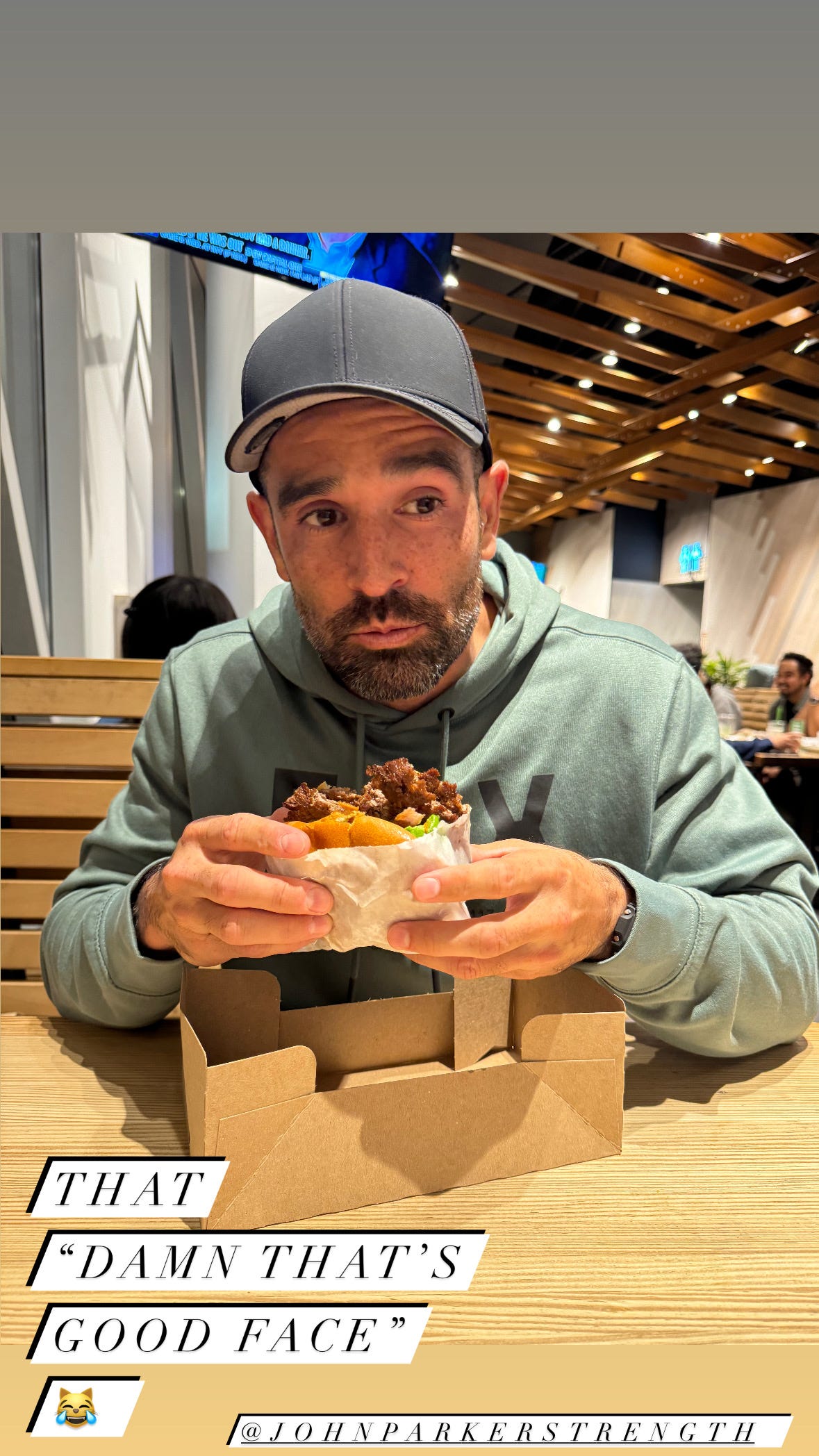
Sometimes the best thing to mix it up is to go get one of your favorite meals out. Beast Tamer. Cannot bite through a double patty burger. We all have our limits.
Start Here This Week
You do not need to overhaul everything.
Just try this once:
Pick a day when you have 40 minutes. Make a large batch of rice and a large batch of whatever protein sounds good. Put it in the fridge.
Then pull from it for the next four days and see how it changes your week.
You will spend less time thinking about food. You will make better choices by default. You will feel better. And you will probably do it again the following week without even thinking about it.
Protein-rich meals also tend to improve satiety and stabilize energy, making it easier to stay consistent without constantly thinking about food.
That is how a system becomes a habit.
That is how a habit becomes a result.
Small systems repeated consistently create disproportionate results over time.
That is how a habit becomes a lifestyle.
And ultimately, how a lifestyle shapes performance, health, and longevity.
Train with intent. Fuel with purpose.
Diana
StrengthAxis