

What A Kettlebell Swing Session Taught Me About Resilience
A reminder that resilience is built through balance, not chaos

Swing: 40kg - 5/30:00 NL 150 (126 bpm average)
This morning I had extra time.
Normally, that immediately turns into a mountain bike ride.
The trails call to me almost automatically now. Exploration, movement, challenge, adrenaline, fresh air - it’s one of the purest forms of enjoyment in my life.
But this year I’ve become increasingly focused on practicing what I preach.
Not just writing about balance.
Not just teaching recovery.
Actually living it.
And if I’m being honest, I knew a hard ride today would have violated one of my own rules:
One hard training session.
One outdoor exploration session.
One day off (active recovery is allowed).
That realization is interesting because most people don’t mentally categorize mountain biking, hiking, sports, or outdoor adventures as “training stress.”
But they absolutely are.


A demanding ride can bury your nervous system just as effectively as a heavy lifting session:
high-output efforts
adrenaline
grip fatigue
eccentric loading
long durations
technical focus
impact and vibration
Just because we enjoy something doesn’t mean it’s free.
The outdoors is part of my philosophy.
But even the things we love still carry a recovery cost.
That’s something I’m continuing to learn.
So instead of forcing another big output day, I decided to perform a kettlebell swing session.
Simple.
Familiar.
Effective.
And honestly, deeply grounding.
I haven’t been swinging kettlebells consistently lately, but every time I return to them, I’m reminded why they became such a foundational part of my training philosophy in the first place.
The kettlebell swing is one of those movements that continues teaching you forever.
Today it was my feet.
Specifically:
pressure through the big toe
forefoot connection
how that connection translated into explosive hip extension
I also returned to the basics of breathing:
a sharp inhale through the nose during the downswing, followed by a violent exhale as the hips snapped through.
Nothing fancy.
Nothing revolutionary.
Just fundamentals.
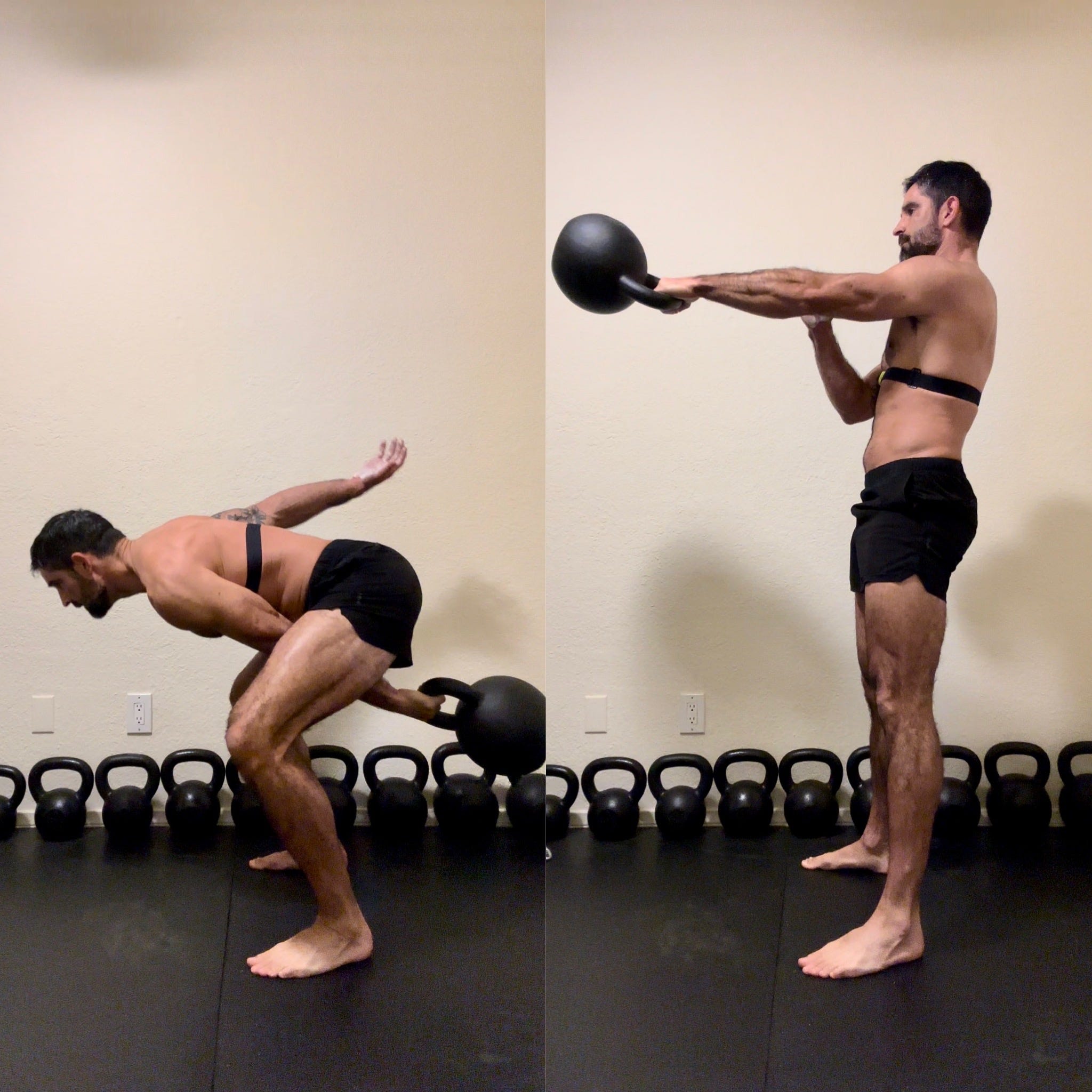
I hinge more deeply than others… It’s ingrained. I was a jumper and each swing needs to have maximum power. I hinge, therefore I am.
The deeper your relationship with training becomes,
the less you chase novelty and the more you refine simplicity.
At this point in my life, I’m less interested in proving I can survive hard training sessions.
I already know I can suffer.
What interests me now is sustainability.
Longevity.
Performance without chaos.
That’s where I think many people misunderstand the concept of MED - the Minimum Effective Dose.
People hear “minimum” and assume it means easy.
It doesn’t.
MED often means training incredibly hard.
But it also means removing waste.
Removing unnecessary fatigue.
Removing junk volume.
Removing ego.
It means asking:
“What is the smallest amount of work required to produce the adaptation I want?”
Sometimes that answer is brutally difficult.
But it’s still intelligent.
That’s the difference.


MED isn’t about avoiding effort.
It’s about eliminating waste.
Today’s session reminded me that training itself is still stress - even when it’s therapeutic, enjoyable, or mentally calming.
Training occupies the mind.
It reduces anxiety.
It creates structure.
It sharpens focus.
But the body still has to recover from it.
Balance is everything.
Ironically, I’ve found that when I respect balance, I actually become more capable physically.
My body responds better.
My joints feel better.
My motivation stays higher.
My outdoor performance improves.
And perhaps most importantly:
I continue enjoying training.
That matters more than people realize.
The swing session itself wasn’t complicated.
I stayed around what I consider my “everyday” swing weight:
40kg - roughly half bodyweight.
Not maximal.
Not performative.
Not ego-driven.
Just strong enough to demand respect while still allowing crisp, explosive movement.
That’s another shift I’ve made over the years:
I’m less interested in demonstrating peak strength for a moment in time and more interested in owning strength consistently.

Being strong is cool, but I want to be happy too.
Resilience is restraint.
Resilience is balance.
Resilience is leaving something in the tank for tomorrow.
The older I get, the more resilience seems to come from balance rather than intensity alone.
And strangely enough, a simple kettlebell swing session reminded me of all of that.
The basics never stop teaching you - if you’re humble enough to return to them.
John Parker
StrengthAxis
🤩🤩🤩👏🏻