

[The Smart Lifter's] 12-Week Progressive Overload Plan
Variable Resistance Training

[Blood Chemistry] StrengthAxis Performance Panel
![[Blood Chemistry] StrengthAxis Performance Panel](https://substackcdn.com/image/fetch/$s_!eqfd!,w_1300,h_650,c_fill,f_webp,q_auto:good,fl_progressive:steep,g_auto/https%3A%2F%2Fsubstack-post-media.s3.amazonaws.com%2Fpublic%2Fimages%2F8d7e2d28-33cc-4f94-a5a6-55dc5e39aaaa_1545x2000.jpeg)
For years I’ve watched lifters and athletes do everything “right” on paper - train hard, eat clean, sleep decently - and still feel like something is holding them back.
Test, don’t guess. For more information on the StrengthAxis Performance Panel, please reach out to me directly.


Before engaging in this 12 week progressive overload plan, make sure to read and follow the initial four week plan in The Smart Lifter’s Band Training System.

The Smart Lifter’s Band Training System
12 Week Progressive Overload Plan
Strength isn’t built by doing more. It’s built by doing what matters consistently.
[The Smart Lifter’s] 12-Week Progressive Overload Plan is your compass.
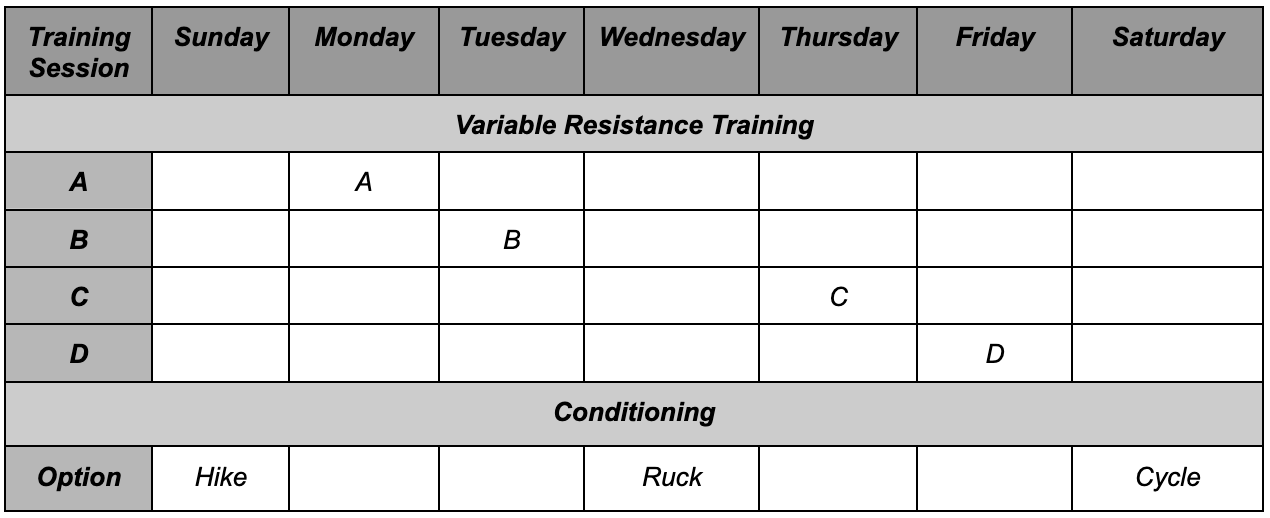
Schedule
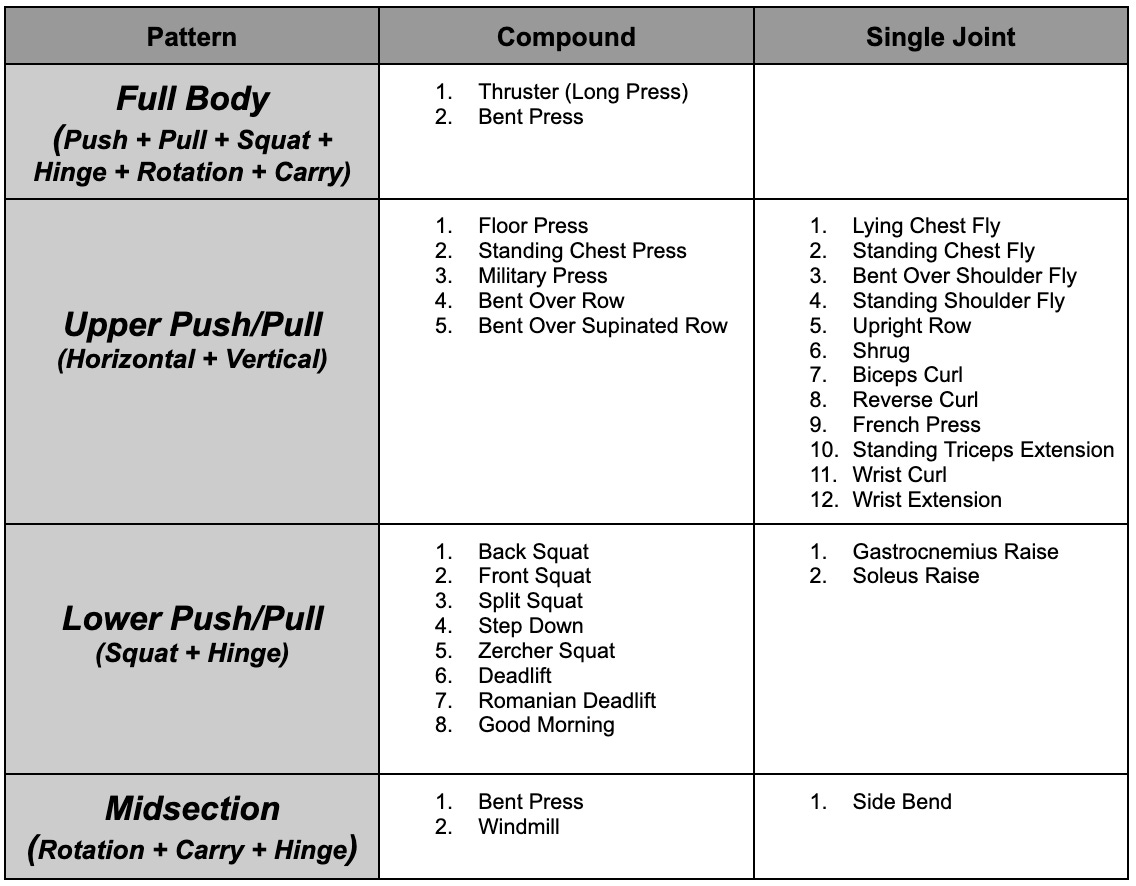
Variable Resistance Training Exercise Catalog
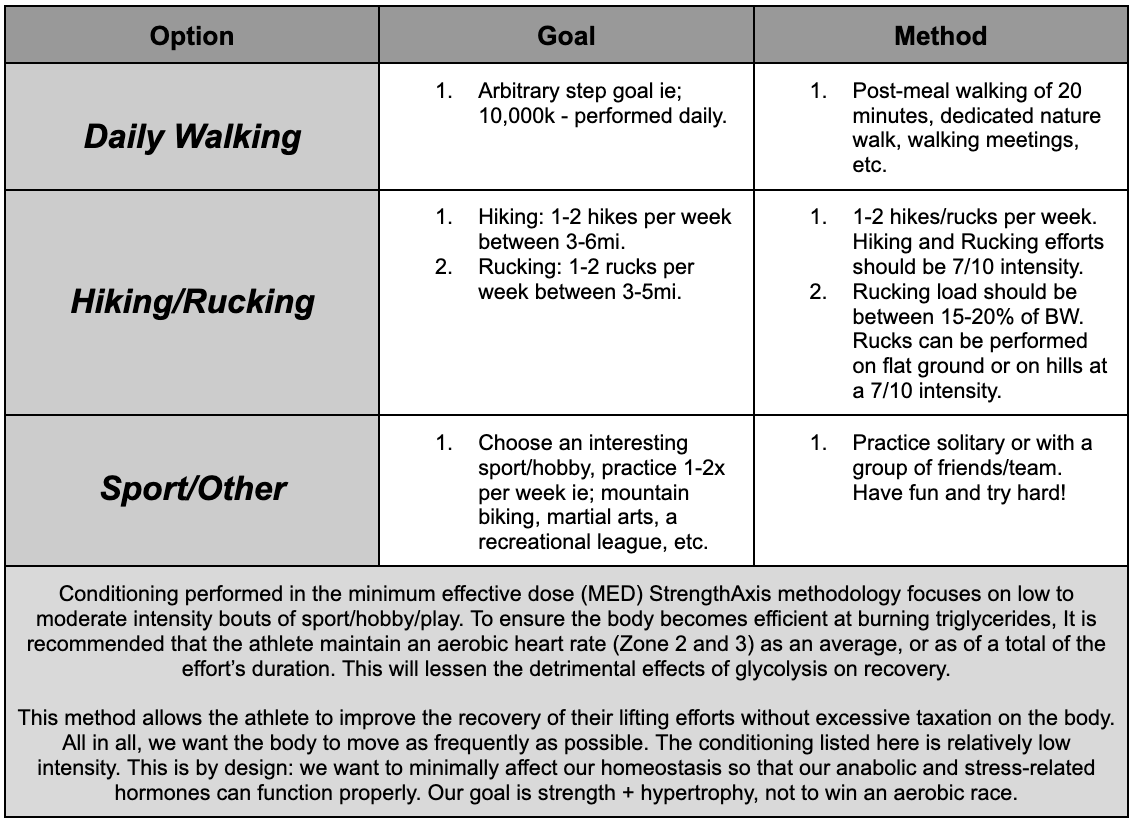
Conditioning Recommendations
Resiliency Training
Warm ups should be individualized based on the athlete’s needs. For variable resistance training, the athlete should go through a full-body mobility routine for the spine, shoulders, elbows, wrists, hips, knees, and ankles.
The smart lifter will select which options best serve their current level of ability and the movements which are needed to safely perform the exercises listed in this 12-week program. For additional support, please leave a comment on this post.
Training Overhead Mobility and The Long Stretch are my two favorite selected resources for comprehensive warmups and resiliency. They are listed below ↓↓↓
Training Overhead Mobility

A lack of thoracic extension and rotation puts undo stress on the shoulder girdle and lumbar spine during the Double Kettlebell Military Press, Clean + Jerk, and Double Snatch. Below are the choice mobility exercises I use for better overhead positioning.

Below is the standard warm up/resiliency I prescribe for my kettlebell-focused athletes.
Self-Myofascial Release - Foam Rolling/Mobility
Upper Body Mobility/Priming: Scapular Strength 15 reps each/2 or Crossover Symmetry 8 reps each/2, Hardstyle Plank 20”/2
Lower Body Mobility/Priming: Tibialis Raise: 20/2, Standing Calf Raise: 20+20/2, ATG Split Squat 15+15/2, Poliquin Step Up 15+15/2
High Efficiency Stretching: Upper, Midsection, Lower
Nutrition can be a complicated topic, but the functionally-focused VRT athlete should buid a foundation based on the key aspects listed in this article ↓↓↓

Preferred Method 2: Standard - Breakfast, Lunch, Dinner + PWO Meal
a. Protein Intake = 1g of animal protein per ideal pounds of bodyweight.
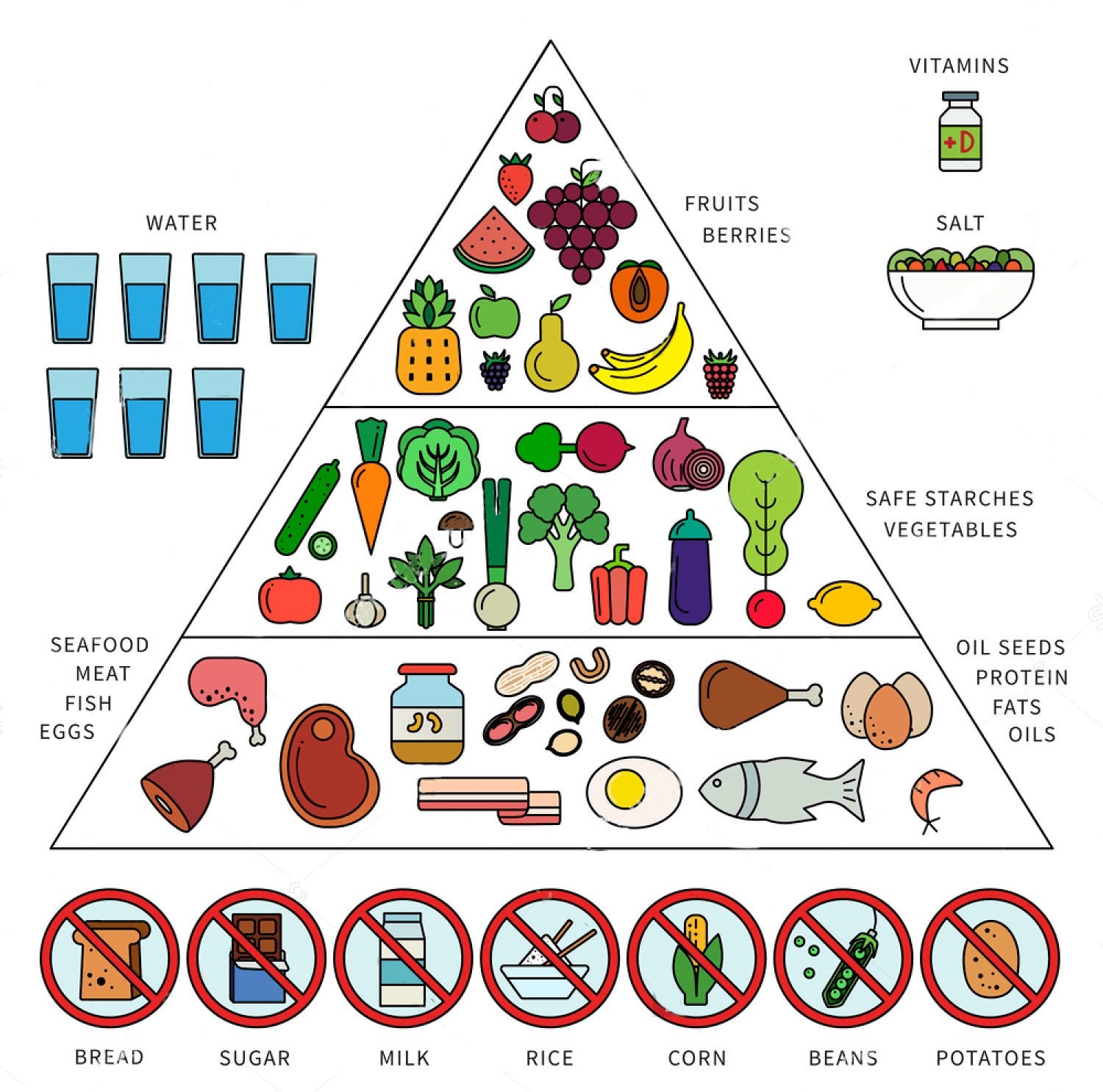
A Paleo/Whole30 template can work for everyone. But remember, these nutritional guidelines only work if you do.
Progressive Overload
The VRT athlete will use the table below as a guide to progressive overload. I have listed definitions of the program cueing for a comprehensive program understanding.
It is imperative that the VRT athlete take initiative in knowing their body and what suits their individual preferences, willingness to train, and ideas on improvement. Use the table below for reference or to define your own progressive overload strategy.
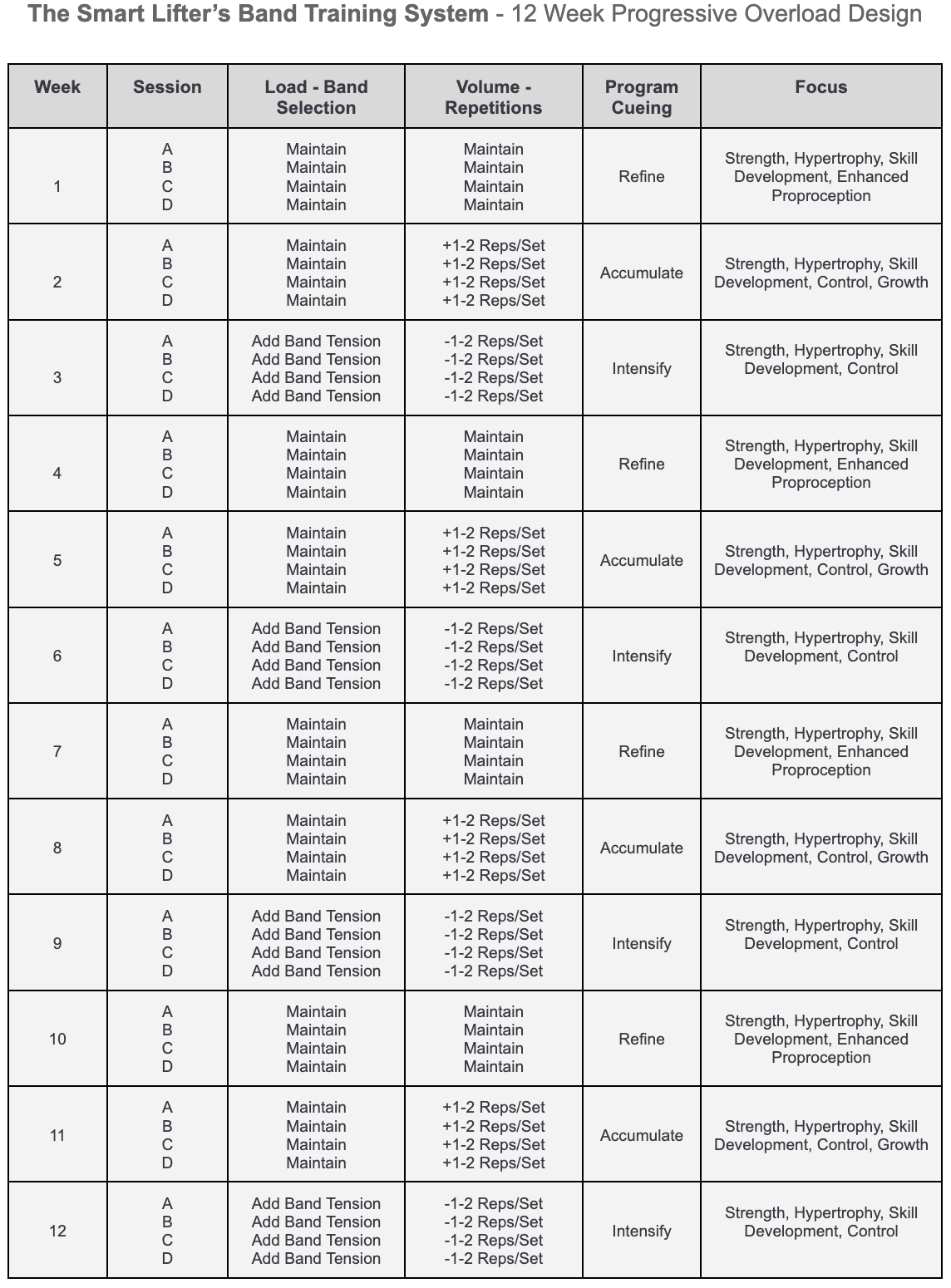
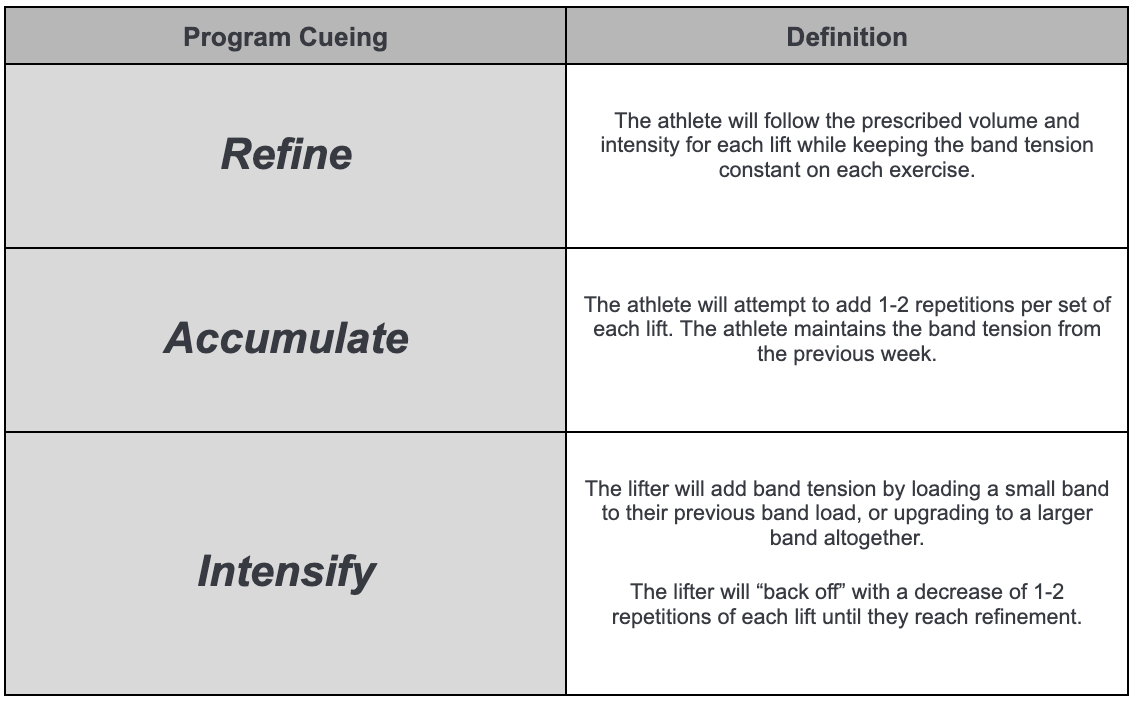
Program Key
Volume (Reps)
Within each training session’s programming table, the reader will see numbers like, 12, 12, 10, 10. This means that their first set is 12 reps, second set is 12 reps, third set is 10 reps, and fourth set is 10 reps.
For many exercises, the reader will only see one number ie; 12, with the next block noting that there are 3 sets total: 12, 12, 12 = 36 total repetitions for the movement.
Tension
Tension refers to the band load used in each exercise. I have used a traditional categorization of light, medium, and heavy. These are arbitrary measurements for the individual athlete. Their experimentation to determine these loads is warranted.
For Month 1 - Training Session A, let’s look at two options.
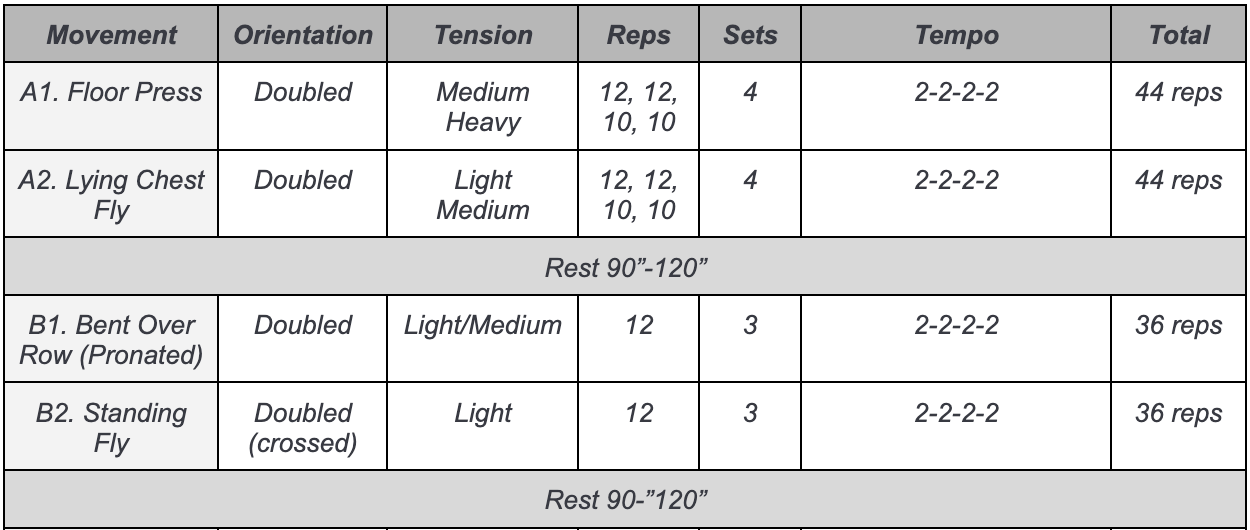
A1. Floor Press - tension is written as a Medium for the first two sets (12, 12). Then the athlete will jump to Heavy for the next two sets (10,10).
B1. Bent Over Row (Pronated) - tension is written as Light/Medium, meaning the athlete will choose a tension, or combination of band tensions, to achieve a light→medium loading. They will perform 12 repetitions and 3 total sets.
The reader should note that the forward slash ( / ) ie; Light/Medium denotes this combination of loading for the exercise
Pyramids
12, 10, 8, 15 means first set: 12 reps + second set: 10 reps + third set: 8 reps + fourth set: 15 reps. The athlete might need to adjust the band’s tension to accommodate this volume scheme.
Blocks
Training sessions are organized by blocks ie; A1→A2. The athlete will perform A1 directly to A2, then rest. Some blocks are up to four exercises in succession ie; C1→C2→C3→C4. The athlete will perform C1, directly to C2, directly to C3, directly to C4, then rest.
Tempo
In month 2, the VRT athlete will begin performing tempo denoted by four numbers ie; 2-2-2-2.
These four numbers define the speed of each phase of a repetition:
eccentric, pause, concentric, pause
For example, 2-2-2-2 means a 2-count lowering, a 2-count pause at the bottom, a 2-count lift, and a 2-count pause at the top. In this program, tempo is used to control time under tension and progression without (necessarily) relying on heavier loads.
In Month 2, the VRT athlete will employ “Power Concentrics/Slow Eccentrics” by following a 4-2-X-2 ie; a 4-count lowering, a 2-count pause at the bottom, an explosive lift (X denotes power), and a 2-count pause at the top.
Rest Periods
The Smart Lifter will rest as long as they need between exercises and block sets to achieve perform form. The author recommends rest periods between 90”-120.”
Author’s Notes
(Individualized) Progressive Overload

The suggestions in this post are generalized recommendations on how to intensify this VRT training protocol. It is prudent that the athlete make a judgement call on what constitutes their own physical training progression.

A heavier band is not necessarily the answer to progress. As mentioned in the The Smart Lifter's Band Training System E-Book, progression can come from better technique, shorter rest periods, a stronger mind-muscle connection, or simply: staying consistent.

Variable Resistance Training Equipment

To run this program efficiently, I recommend owning multiple VRT rigs. Due to the nature of my career and equipment procurement, I own six VRT setups (4 x Harambe System, 2 x X3). I have no expectation that the casual VRT athlete will own this quantity of gear. However, accomplishing super and giant sets are more easily facilitated with multiple systems.

The prudent VRT athlete will also consider accessories to maximize their experience: handles, varying ropes/slings, spacers, a squat belt, squat wedges, wraps, and a lifting belt. Though this is entirely up to the user, it is my personal preference to have a fully-stocked training inventory.
